
What’s the Difference Between Wasps and Bees? A Complete UK Guide to Wasps vs Bees and Hornets
As spring turns to summer across the UK, gardens come alive with the sound of buzzing insects. While many of these visitors are harmless — and even beneficial — others can quickly become a nuisance or a safety concern. A common question we hear from homeowners and businesses is: what’s the difference between wasps vs bees?
Understanding the difference between wasps vs bees, and also wasps vs hornets, is essential. Correct identification helps you respond appropriately — protecting important pollinators while ensuring your home or business remains safe.
In this comprehensive UK guide, we’ll explain how to tell them apart, explore the risks they can pose, and outline how to get rid of wasp nests safely — including when professional wasp nest removal or hornet nest removal is required.
Why Correct Identification Matters
At a glance, bees, wasps, and hornets can look similar. They are all flying insects with striped bodies, and they are most active during the warmer months. However, their behaviour, ecological importance, and risk levels differ significantly.
Misidentifying bees as wasps can result in unnecessary harm to essential pollinators. On the other hand, mistaking a wasp or hornet nest for something harmless can lead to dangerous situations, especially if the nest is disturbed.
Wasps vs Bees: How to Tell the Difference
Let’s break down the physical and behavioural differences between bees and wasps commonly found in the UK.
Bees
In the UK, the two most commonly encountered species are:
- Western honey bee
- Bumblebee
Appearance
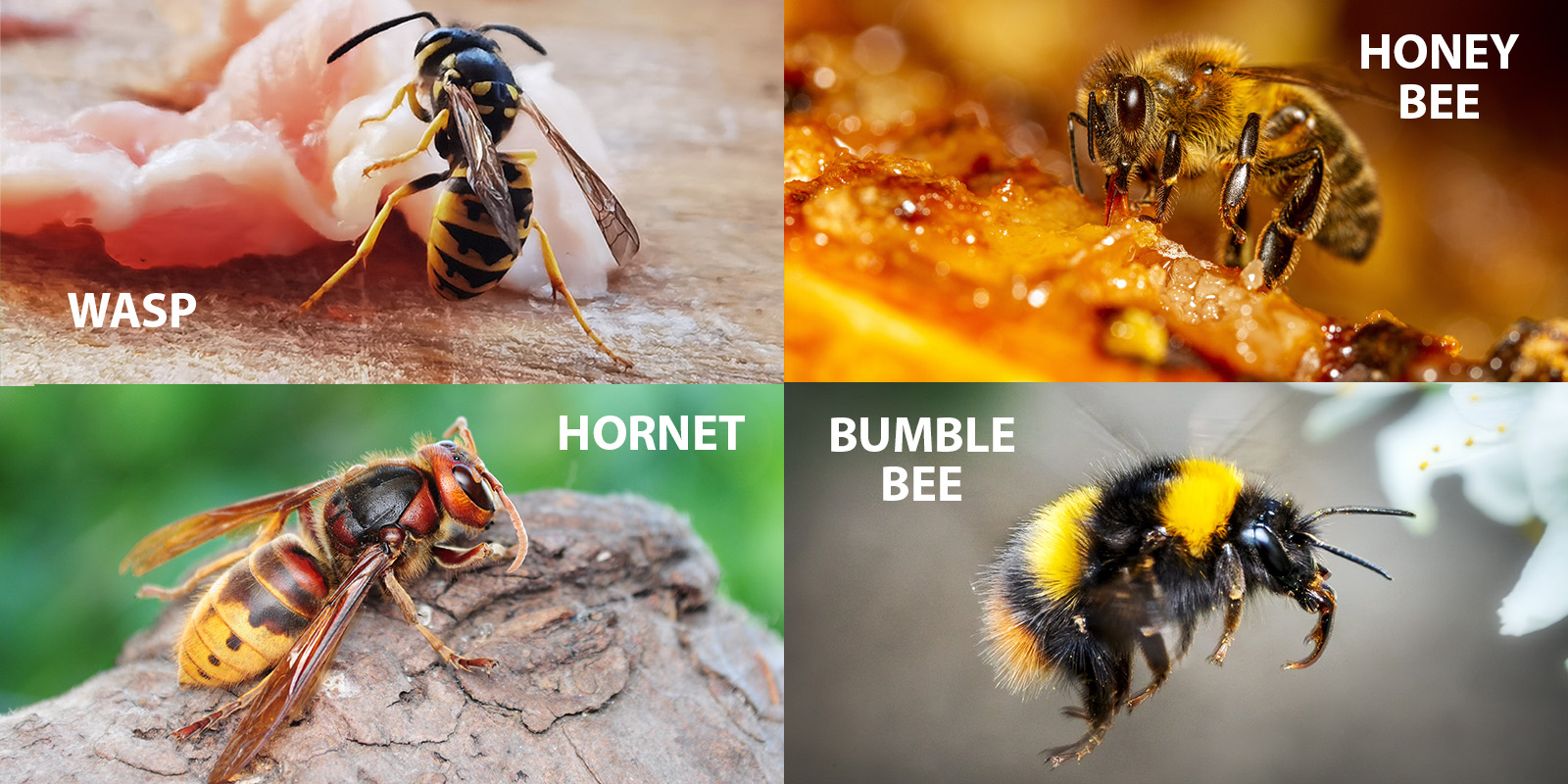
Bees are generally rounder and much hairier than wasps. Their fuzzy bodies are specifically designed to collect pollen, which sticks to the fine hairs on their legs and abdomen.
Honey bees are smaller, their bands are less accentuated than wasps and more gold and brown than yellow and black. They are also fairly slim compared to bumblebees.
Bumblebees are larger, very furry, and often have bold black and yellow stripes — sometimes with orange or white tails depending on the species.
Behaviour
Bees are typically calm and non-aggressive. They are focused on foraging for nectar and pollen rather than interacting with humans.
Honey bees can sting only once before dying.
Bumblebees can sting more than once but rarely do unless directly threatened.
You’ll often see bees moving methodically between flowers rather than hovering around food or bins.
Ecological Importance
Bees are vital to UK agriculture and biodiversity. They pollinate fruit trees, vegetables, crops, and wild plants. Without bees, many of the foods we rely on would become scarce and more expensive.
Because of this, bees — particularly honey bees and bumblebees — should never be destroyed unless absolutely necessary for safety reasons. Swarms of honey bees, which may temporarily gather on trees or fences, can often be safely relocated by local beekeepers.
Wasps: The Common Summer Nuisance
When people compare wasps vs bees, they are often thinking about the more assertive behaviour of wasps.
The most common species in the UK are:
- Common wasp
- German wasp
Appearance
Wasps are slimmer than bees and have a shiny, smooth body. They have a very narrow “waist” between their thorax and abdomen and bright vibrant yellow and black stripes.
Unlike bees, they lack the fuzzy appearance.
Behaviour
Wasps are predators as well as scavengers. In early summer, they feed on insects and can actually help control garden pests.
However, as the season progresses, their diet shifts towards sugary substances.
This is why they are commonly seen:
- Hovering around outdoor drinks
- Swarming near bins
- Interrupting barbecues and picnics
- Gathering near outdoor seating areas
Wasps can sting multiple times and are highly defensive of their nests.
Wasps vs Hornets: What’s the Difference?
When comparing wasps vs hornets, it’s important to know that hornets are actually a type of wasp — just much larger.
The native hornet species in the UK is:
- European hornet
Appearance
Hornets are significantly larger than common wasps, reaching up to 3.5 cm in length. They have brown and yellow markings rather than the bright yellow and black pattern of common wasps.
Their buzzing sound is deeper and louder, which can make them seem more intimidating.
Behaviour
Despite their size, hornets are not typically aggressive unless provoked. However, they are extremely protective of their nests. If disturbed, they can deliver painful stings and may attack in groups.
Hornet nests are often found in:
- Trees
- Sheds
- Loft spaces
- Wall cavities
- Outbuildings
Because of their size and defensive nature, hornet nest removal should always be carried out by a trained professional.
The Risks of Wasps and Hornets in the UK
While bees are generally beneficial, wasps and hornets can present real risks when nesting close to human activity.
Multiple Stings
Wasps and hornets can sting repeatedly. For most people, this results in swelling and discomfort. However, for those with allergies, a sting can trigger anaphylaxis — a severe and potentially life-threatening reaction requiring immediate medical treatment.
Large Colony Sizes
By late summer, a single wasp nest can contain several thousand insects. Accidentally disturbing it while gardening, repairing roofing, or clearing lofts can result in a swarm attack.
Risks to Businesses
Hospitality venues, cafés, pubs, farms, and holiday accommodation providers can suffer reputational damage if customers encounter aggressive wasps. Quick and professional action is vital to maintain safety and confidence.
How to Get Rid of Wasp Nests Safely
A common online search is how to get rid of wasp nests. While DIY sprays are widely available, attempting to treat a nest yourself can be extremely dangerous.
DIY removal can:
- Agitate the colony
- Lead to multiple stings
- Fail to eliminate the entire nest
- Create risks when accessing rooflines or loft spaces
Blocking the nest entrance is also not effective and can cause wasps to seek alternative exit routes — sometimes into living areas.
The safest option is always professional intervention.
Professional Wasp Nest Removal
Professional wasp nest removal ensures the problem is handled efficiently and safely.
A qualified technician will:
- Correctly identify the species
- Locate the nest entrance and assess colony size
- Wear full protective equipment
- Apply specialist insecticidal treatment
- Ensure complete eradication
In most cases, wasp activity reduces significantly within 24 hours of treatment.
Hornet Nest Removal
Because hornets are larger and more defensive, hornet nest removal requires particular care and expertise.
Attempting DIY removal significantly increases the risk of severe stings. Professional pest controllers have the knowledge, training, and equipment needed to deal with hornet nests safely and effectively.
Protecting Bees: Why They Should Not Be Destroyed
While it’s important to address wasp and hornet infestations, protecting bees remains a priority.
If you notice a cluster of bees resting temporarily, it may simply be a swarm pausing before moving to a new location. In many cases, local beekeepers can safely relocate honey bees without harm.
Destroying bees should always be a last resort, only considered where there is a direct and unavoidable risk to human safety.
Balancing pest control with environmental responsibility is essential.
Need Wasp or Hornet Nest Removal? Contact PreventiPest Today
If you’ve discovered a wasp or hornet nest at your home or business, do not attempt to tackle it yourself. Professional treatment is the safest and most effective solution.
At PreventiPest, we provide fast, discreet, and reliable wasp nest removal and hornet nest removal services across the UK. Our trained technicians will correctly identify the species, treat the nest safely, and ensure the issue is fully resolved with minimal disruption.
Whether you’re dealing with an active nest in your loft, wall cavity, garden, or commercial premises, PreventiPest is here to help.
Contact PreventiPest today for expert advice and rapid response — and restore safety and peace of mind to your property.
DOWNLOAD THE ADVICE SHEET

Leave a Reply